
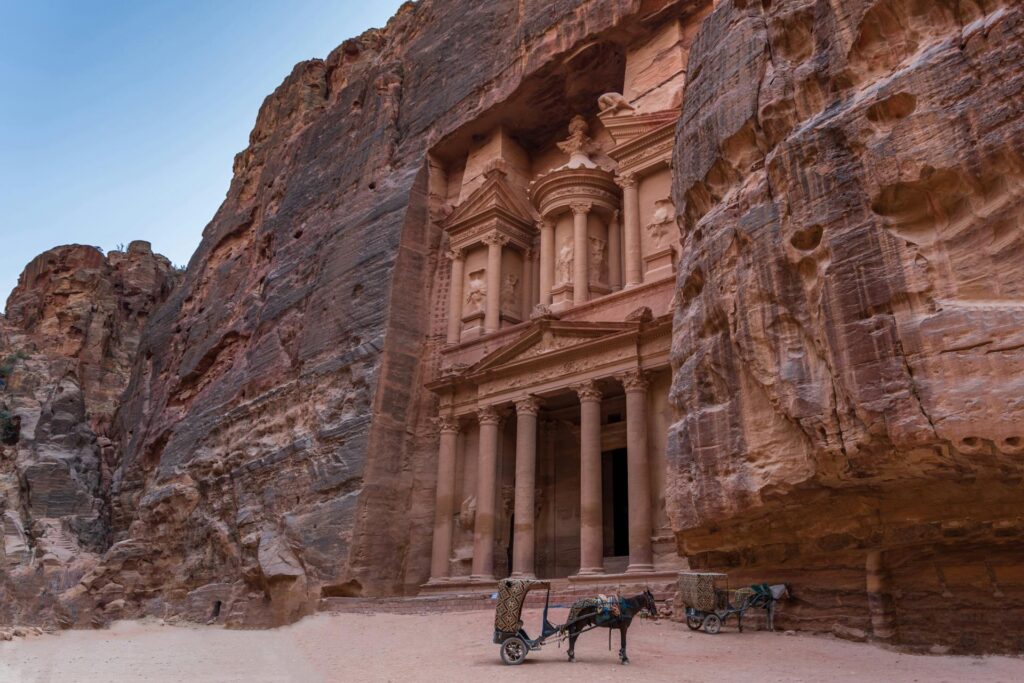
Long before words were written, stone was humanity’s first language of expression.
It was through stone that early civilizations spoke to the future — carving beliefs, power, culture, and identity into materials meant to endure time itself.
Unlike wood or earth, stone offered permanence. It did not bend easily, it did not decay quickly, and it demanded respect from those who shaped it. To build in stone was to make a statement: this will remain.
The Birth of Architecture in Stone
The earliest architectural structures were born from necessity — shelter, protection, and stability. Stone, gathered from the earth itself, became the most reliable material for these purposes.
As civilizations advanced, stone evolved from a practical solution into an artistic medium.
Ancient builders discovered that stone could be:
- Cut and shaped with precision
- Polished to reflect light
- Stacked, carved, and balanced with geometry
This discovery transformed construction into architecture.
Stone as Symbol and Structure
In ancient Greece, marble became a symbol of proportion, order, and beauty. Temples were not simply built — they were composed. Each column, each joint, each surface followed mathematical harmony.
Stone was no longer only structural; it became philosophical.
The Romans expanded this language further. They used stone to express power, engineering mastery, and empire. Massive structures built from travertine and limestone demonstrated that stone could be both monumental and functional — capable of spanning vast spaces while maintaining elegance.
Stone spoke of authority, endurance, and civilization itself.
Carving Memory into Material
Across cultures, stone was chosen for what mattered most:
- Temples and sacred spaces
- Palaces and civic buildings
- Tombs, monuments, and memorials
Why? Because stone does not forget.
Where wood burns and metal corrodes, stone remains — carrying marks of tools, hands, and time. Every chisel mark becomes a historical record. Every worn edge becomes evidence of centuries passed.
To touch ancient stone today is to touch the same surface shaped by craftsmen thousands of years ago.
From Monument to Interior
As architecture evolved, stone gradually moved inward. What once defined cities began defining interiors — floors, walls, staircases, and eventually furniture.
This transition did not diminish stone’s importance; it refined it.
In modern design:
- Stone floors echo ancient courtyards
- Marble walls recall temple facades
- Stone tables resemble sculptural artifacts
Each application is a continuation of architectural history, adapted for contemporary life.
Why Stone Still Matters Today
In an age of synthetic materials and temporary trends, stone remains unchanged in its essence.
It cannot be replicated perfectly. It cannot be rushed. It demands craftsmanship.
Stone teaches patience, precision, and respect for material.
When used today, stone connects:
- Past and present
- Nature and design
- History and modern living
It is not decorative — it is foundational.
Stone as a Living Language
Stone is still speaking.
Through carefully designed interiors, restored marble floors, and custom stone furniture, we continue this ancient dialogue. Every slab carries millions of years of geological history and centuries of architectural tradition.
To work with stone is to become part of that story.