
Across history, civilizations have risen, flourished, and disappeared — yet stone remains.
More than any other material, stone became humanity’s tool for permanence, identity, and cultural memory.
Before steel, before concrete, before glass, stone was civilization itself.
The Earliest Civilizations: Building to Last
The earliest societies turned to stone not for beauty, but for survival. Stone offered strength, protection, and resistance against time and nature. As tools evolved, early builders learned how to shape, stack, and balance massive stones with remarkable precision.
These early stone structures were more than shelters. They were:
-
Symbols of unity
-
Expressions of belief
-
Marks of territory and power
Stone became the foundation upon which societies organized themselves.
Ancient Egypt: Stone as Eternity
In Ancient Egypt, stone was chosen for eternity.
Limestone, sandstone, and granite were used to construct temples, monuments, and tombs intended to outlive generations — even time itself.
Every block was placed with purpose.
Stone was not merely structural; it was spiritual.
The Egyptians believed stone carried permanence into the afterlife. This belief transformed architecture into an act of devotion, where craftsmanship and meaning were inseparable.
Greece: Stone and Proportion
The ancient Greeks elevated stone to philosophy.
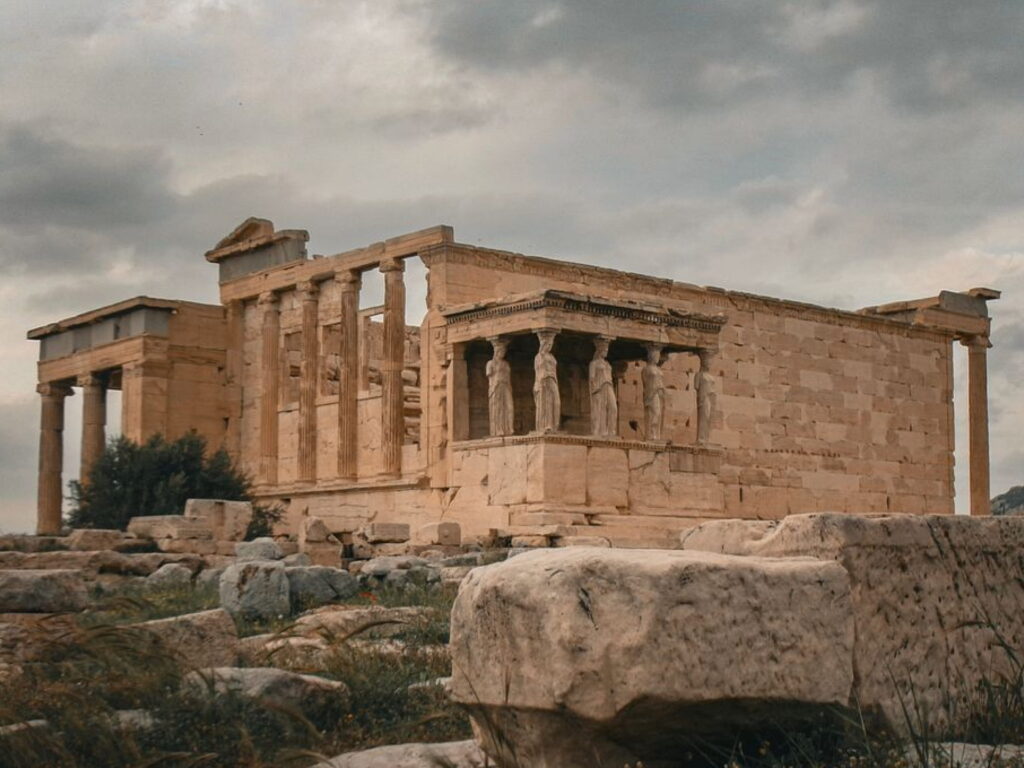
Marble became the material through which balance, order, and proportion were expressed.
Architecture followed mathematical harmony. Columns were carved with subtle refinements invisible at first glance but essential to perfection. Stone was shaped not to dominate, but to achieve visual balance.
In Greek civilization, stone represented:
-
Reason
-
Beauty
-
Human intellect
This approach defined classical architecture for centuries to come.
Rome: Engineering in Stone
The Romans expanded stone’s role from beauty to engineering mastery.
Using travertine, marble, and limestone, they built roads, aqueducts, amphitheaters, and cities designed for function and scale.
Stone allowed Rome to build infrastructure that supported an empire. Arches, vaults, and massive public structures proved that stone could be both monumental and practical.
Roman stonework expressed:
-
Power
-
Order
-
Permanence of empire
Many of these structures remain in use today — a testament to stone’s durability.
Islamic Civilizations: Stone, Light, and Geometry
Islamic architecture transformed stone into a medium of reflection and spirituality.
Marble and limestone were used to create calm, ordered spaces guided by geometry and symmetry.
Rather than figurative imagery, stone surfaces were animated through:
-
Repetition
-
Pattern
-
Light interaction
Courtyards, prayer halls, and ablution spaces used stone to cool air, reflect water, and create a sense of infinity — connecting architecture with nature and faith.
Stone Across Asia and the East
Across Asia, stone became a canvas for intricate carving and symbolic storytelling.
Entire temples were sculpted from solid rock, turning stone into narrative architecture.
Here, stone expressed:
-
Spiritual devotion
-
Cultural mythology
-
Artistic mastery
Each surface carried stories, symbols, and craftsmanship passed down through generations.
From Civilization to Contemporary Design
Though civilizations changed, stone never lost relevance.
What once shaped temples and cities now shapes interiors, furniture, and surfaces.
Modern design inherits centuries of stone knowledge:
-
Floors echo ancient courtyards
-
Walls recall monumental facades
-
Stone tables resemble sculptural artifacts
Stone connects modern life to ancient hands.
Why Stone Still Defines Civilization
Stone endures because it demands respect.
It cannot be rushed. It cannot be replicated. It records time through wear rather than decay.
In every era, stone reflects the values of those who shape it.
To use stone today is not to follow a trend — it is to continue a civilizational tradition.